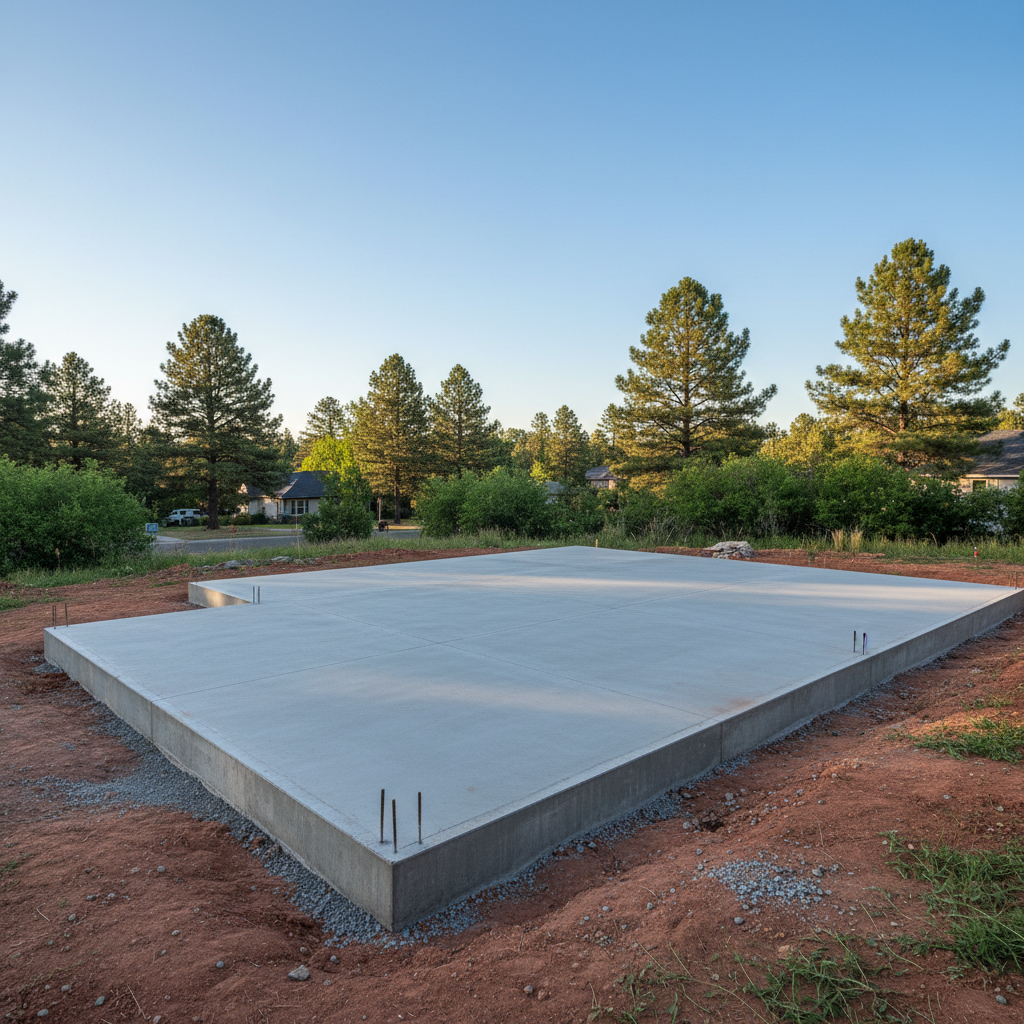
Alright, let's talk foundations. You might think concrete is concrete, right? Just pour it, let it dry, and you're good to go. But if you're building or renovating here in Flagstaff, that kind of thinking could cost you a lot down the line. Up here, a solid foundation isn't just about good concrete; it's about understanding what our mountain town throws at it.
Flagstaff's Ground Rules: It's Not Just Dirt
When I look at foundations, the first thing I always check is the ground itself. You see, Flagstaff isn't like Phoenix or Tucson. We're sitting at nearly 7,000 feet, and our soil tells a unique story. Much of it is volcanic, a mix of cinders, basalt, and expansive clay that acts very differently from desert soils. This isn't just some academic point; it directly impacts how your foundation needs to be built. Expansive clay, for instance, swells when it gets wet and shrinks when it dries. Can you imagine that constant movement under your house? It's like a slow, steady push and pull that can really stress a foundation not designed for it.
Then there's the frost. We get over 100 frost days a year, and our frost depth can reach 18 to 24 inches in severe winters. That means the ground freezes and thaws repeatedly – we call that freeze-thaw cycling. When water in the soil freezes, it expands and pushes upward. That's frost heave. If your footings aren't deep enough or your foundation isn't properly engineered, that upward pressure can cause significant damage, like cracks and uneven settling.
Common Projects & Local Challenges
We work on all sorts of foundation projects here at Flagstaff Concrete Paving. From new custom homes in places like Pine Canyon or Flagstaff Ranch to additions on older homes in the Sunnyside or University Heights districts, the principles stay the same, but the way we do it changes.
- New Home Construction: For new builds, especially in developments like Timber Sky or Juniper Point, we're often dealing with fresh excavations. We've got to make sure the site prep is just right. That means proper grading, checking the soil conditions, and designing a foundation that can handle the local geology and climate. We're talking about deep footings, often 30 inches to get below that frost line, and sometimes even pier foundations for manufactured homes.
- Additions and Garages: Tying a new foundation into an existing one is tricky business, especially if the original structure is older. We see a lot of homes built between the 50s and 80s where the original foundations weren't designed with today's understanding of our local soil behavior. You can't just slap a new slab next to an old one and expect it to hold up without issues.
- Foundation Repair: This is where local knowledge really shines. If you're seeing diagonal cracks around windows, sticking doors, or uneven floors, especially after a wet spring or heavy snowmelt, your foundation might be moving. We've seen homes settle inches, and the cracks can be huge, not just hairline. Fixing these issues means understanding whether it's settlement, heave, or lateral movement – all common here.
Why Local Expertise Isn't Just a Buzzword
So, why does all this matter? Because a foundation isn't a one-size-fits-all deal. What works in a warmer, drier climate just won't cut it here. A contractor from out of town might not understand:
- The Freeze-Thaw Cycle: They might use shallower footings or concrete mixes that aren't tough enough for our daily temperature swings. Flagstaff's building codes actually require more steel reinforcement in foundation walls than in places like Phoenix, and inspectors are checking for it.
- Expansive Clay and Volcanic Cinder: They might not recognize the signs of these tricky soils or know how to properly prepare the sub-base to prevent future problems. Good drainage is also key, as pooling water next to your foundation can make things worse in our expansive soils.
- Our Specific Building Codes: The City of Flagstaff has its own amendments and requirements for foundations, including specific frost depth requirements. You need a contractor who knows these codes inside and out to make sure your project passes inspection and is built to last.
When you put money into a foundation, you're investing in the stability and long life of your entire home. You wouldn't hire a desert landscaper to design a garden for our Ponderosa pines, right? It's the same principle with concrete foundations. You need someone who lives and works here, someone who understands the unique challenges of building in Flagstaff. We've poured hundreds of foundations in this town, and we know what it takes to make them stand strong against our beautiful – but sometimes tough – environment.