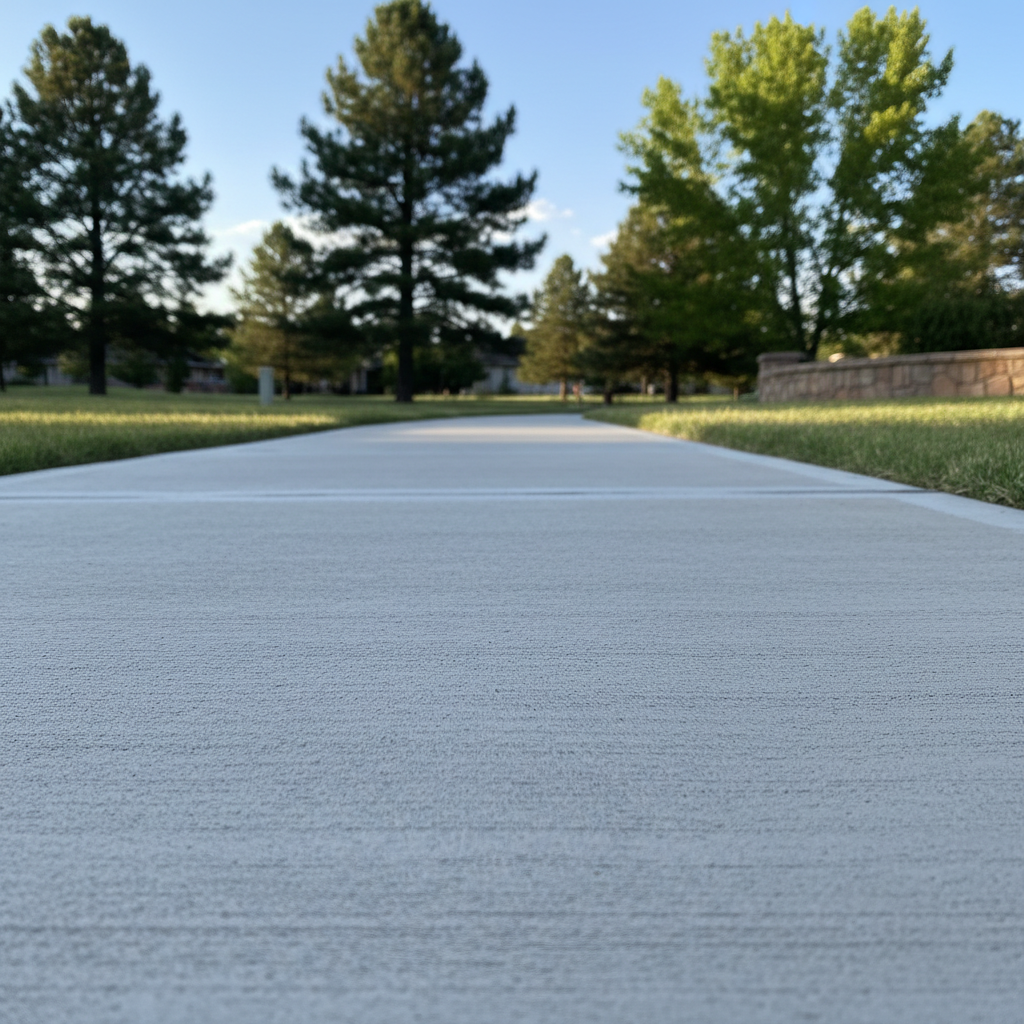
Running concrete sidewalks around a home in Flagstaff brings up many questions, especially once you factor in our high altitude, intense winter freezes, and shifting mountain soils. Over the years, Flagstaff Concrete Paving has heard just about every concern a homeowner can bring up. Flagstaff Concrete Paving will tackle the most common questions straight-up.
How thick should a residential sidewalk actually be?
For standard foot traffic, four inches is the industry baseline. But up here in neighborhoods like Cheshire or Flagstaff Ranch where the freeze-thaw cycle really works over the ground, going five or even six inches thick in high-traffic zones makes a massive difference. Skimping on thickness invites cracks the first time heavy winter frost heave pushes against the slab. Flagstaff Concrete Paving makes sure every sidewalk is poured to the right thickness for the local climate.
Why do control joints matter so much around here?
Concrete naturally shrinks as it cures and expands when temperatures swing wildly between our chilly nights and warm afternoon sun. Control joints create intentional weak lines so the concrete cracks neatly down inside the joint rather than jaggedly across the middle of your walkway. If a contractor tries to rush your sidewalk and skips cutting proper joints, you will see ugly cracks splitting your path within a year or two. Concrete Sidewalk construction requires precise joint placement to handle the temperature shifts in Flagstaff, AZ.
Can you pour a sidewalk during winter in Flagstaff?
For the most part, you just should not pour concrete in freezing weather. Pouring when temperatures drop below forty degrees at night means the water in your mix can freeze before the concrete gains its strength, turning the whole slab into a weak, crumbly mess. Flagstaff Concrete Paving sticks to late spring, summer, and early fall for exterior pours so the mix cures out right. For concrete work in Flagstaff, timing is very important.
What causes sidewalks to sink or tilt toward the house?
Water management is usually the culprit. If your downspouts empty right next to the walkway, or if the sub-base was not compacted properly during installation, the soil underneath will wash away or settle. When summer monsoons drop heavy rain fast, poor grading lets water pool near your foundation instead of shedding away from it. Always verify your contractor grades the slope properly before the forms go up. Flagstaff Concrete Paving checks all sub-grades before any concrete is poured.
Should I seal my new concrete sidewalk?
Sealing is very important up here. Once your new concrete has fully cured—usually around 28 days—putting down a quality penetrating sealer blocks moisture from soaking into the pores. When trapped water freezes, it expands and causes the top layer to flake off, a headache known as spalling. Reapply that sealer every couple of years to keep the surface protected. Flagstaff Concrete Paving provides concrete services that stand up to the weather in Flagstaff, AZ.
How do I clear snow without ruining the surface?
Skip the metal shovels if you can, and stay far away from harsh chemical de-icers that eat away at the paste on top of the concrete. Use a plastic shovel, toss down plain sand for traction, or use safe de-icers like magnesium chloride in strict moderation. Letting ice sit and melt repeatedly while using cheap salt will pit and ruin a brand-new sidewalk in no time. For homes in Flagstaff, proper winter maintenance keeps concrete surfaces looking solid for many years.