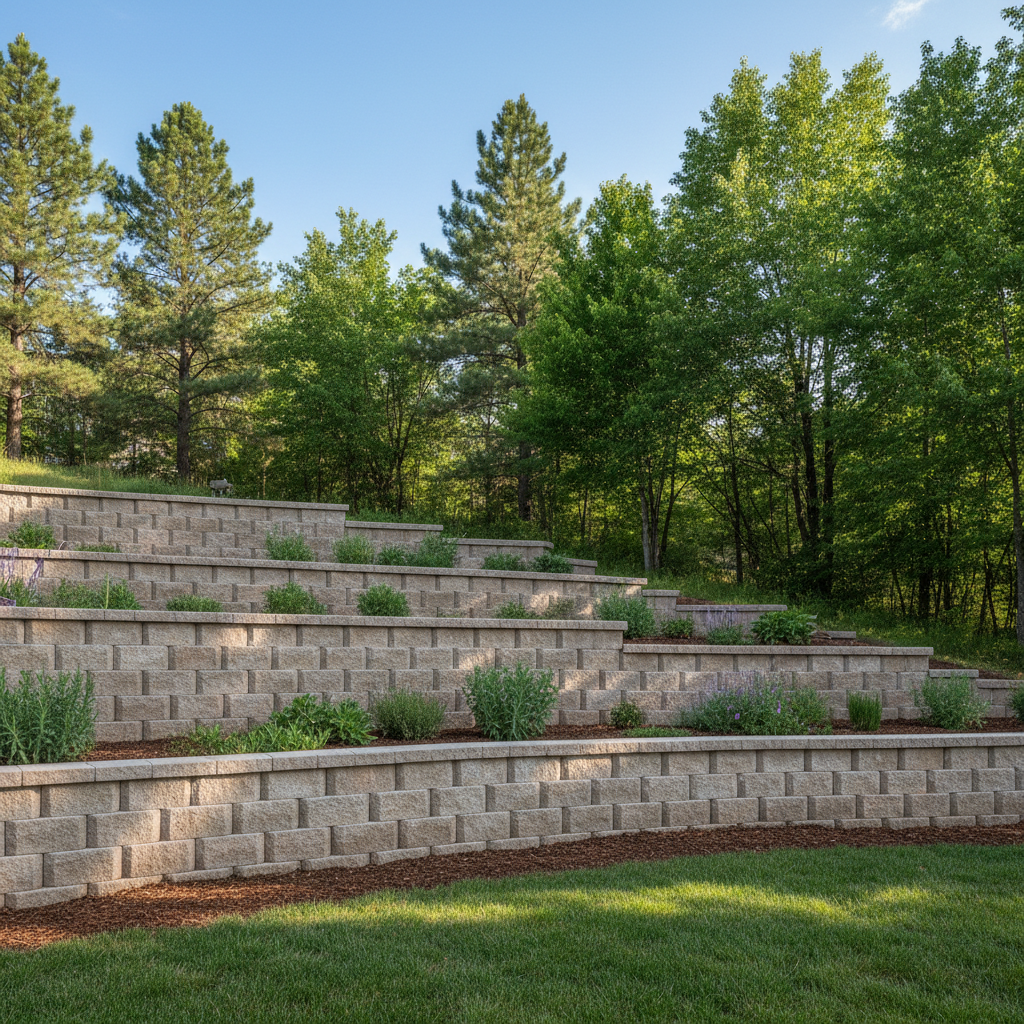
So, you've got a concrete retaining wall. Maybe it's holding back a hillside in your backyard, creating a level patio space, or just adding some curb appeal. Whatever its job, that wall is working hard, especially here in Flagstaff with our wild weather swings. You want it to last, right? Of course you do. I've been building these things for years, and I can tell you, a little bit of smart maintenance goes a long way.
Extending Your Wall's Lifespan
The biggest thing you can do to extend the life of your concrete retaining wall is to manage water. Seriously, water is concrete's best friend and worst enemy. When we build a wall, we always make sure there's proper drainage behind it – usually a gravel backfill and a perforated pipe (a 'French drain'). If that system gets clogged, water builds up, freezes in winter, and pushes on the wall. That's a recipe for disaster.
Keep an eye on the area directly behind your wall. Make sure downspouts aren't dumping water right there. If you're landscaping, choose plants that don't need a ton of water near the wall, and avoid planting large trees too close whose roots could eventually push against the structure. Good drainage is key, especially with our heavy summer monsoon rains and the freeze-thaw cycles we get all winter long.
Regular Maintenance: What to Look For
You don't need to be out there with a magnifying glass every day, but a quick check a couple of times a year can save you a headache. Here's what I recommend:
- Check the drainage: After a big rain or snowmelt, walk around the wall. Is water pooling at the base? Do you see water seeping out of weep holes (those little openings at the bottom) or is it just sitting behind the wall? Make sure those weep holes are clear of debris.
- Look for cracks: Small hairline cracks are often normal, especially in a long wall. But if you see cracks that are wider than a credit card, or if they're running horizontally or in a stair-step pattern, that's a red flag.
- Inspect the surface: Is the concrete spalling (flaking or chipping)? This can happen from water getting into the concrete and freezing, or from de-icing salts. If you've got a sealed wall, check if the sealant is still doing its job.
- Check for leaning or bulging: Stand back and look at the wall from a distance. Does it look straight and plumb? If it's starting to lean outwards or bulge in spots, that's a serious issue.
- Clear vegetation: Keep weeds and brush from growing directly against the wall. Roots can cause problems, and vegetation can trap moisture.
A good cleaning once a year can also help. A pressure washer on a low setting can remove dirt and moss, but be careful not to blast away at any loose concrete.
Warning Signs You Can't Ignore
Some things just scream