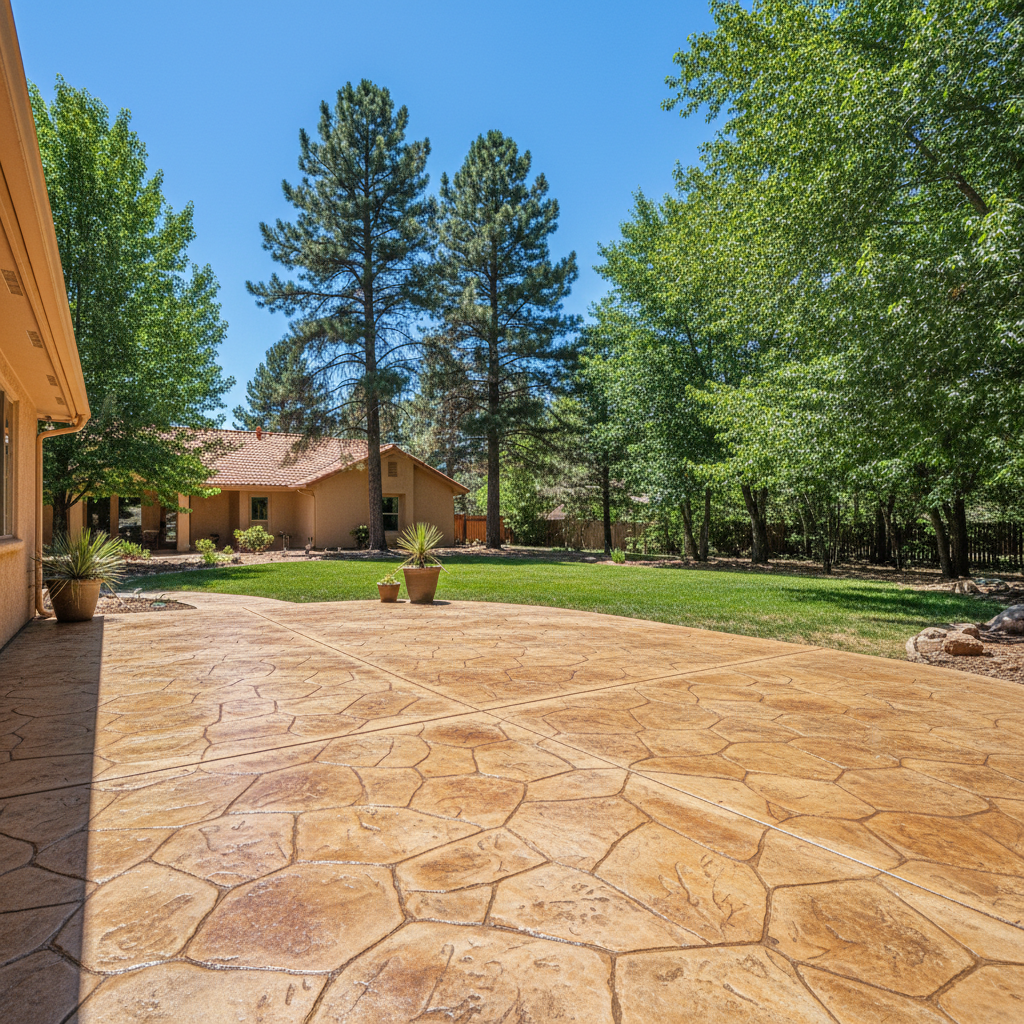
So, you've got some really nice stamped concrete around your place – maybe it's a patio, a walkway, or even your driveway. Looks pretty sharp, doesn't it? That's because it's made to look just like natural stone, brick, or wood, giving you that fancy vibe without the hefty price tag or the constant upkeep those other materials demand. But here in Flagstaff, our weather really puts outdoor surfaces through the wringer. We get those scorching summer sun rays, the brutally cold winter nights, and the freeze-thaw cycles that can seriously challenge concrete. If you want your investment to keep looking good for years, you've got to show it a little love.
Making Your Stamped Concrete Last Longer
The single most important thing you can do to make your stamped concrete last is proper sealing. When we put in stamped concrete, we always apply a top-notch sealer. This isn't just about making it shiny; it's a critical protective layer. It keeps moisture out, stops stains from setting in, and guards the color against UV fading. Think of it as sunscreen and a raincoat all rolled into one for your concrete.
You'll need to re-seal your stamped concrete every two to three years. Sometimes, you might even need to do it more often, especially if it sees a lot of foot traffic or bakes in the sun all day. How do you know when it's time? Just pour a little water on it. If the water beads up nicely, your sealer's still doing its job. But if it soaks in and darkens the concrete, then yeah, it's definitely time to re-seal. Don't drag your feet on this. That sealer is your best defense against our harsh Flagstaff elements, particularly with our deep winter freezes and the intense summer UV exposure that can fade colors surprisingly fast.
Regular Upkeep: It's Simpler Than You Think
Honestly, stamped concrete doesn't ask for much, but "low maintenance" isn't the same as "no maintenance." Here's what I suggest:
- Keep it Clean: Regularly sweep away dirt, leaves, and pine needles. That stuff can break down and stain your concrete over time, especially if it gets wet and just sits there. For tougher grime, a good rinse with a garden hose and some mild detergent (like dish soap) along with a soft brush usually does the trick. Just be sure to rinse it really well so you don't leave any soapy residue behind.
- Watch for Stains: If you spill something – oil, grease, or even something acidic like soda – clean it up right away. The longer it sits, the harder it is to remove, and it can etch the sealer or even the concrete itself.
- Skip Harsh Chemicals: Don't use abrasive cleaners, strong acids, or pressure washers set too high. These can strip your sealer, damage the surface, or even dull the color. If you're using a pressure washer, keep the nozzle moving and use a wide spray pattern.
- Snow and Ice: Here in Flagstaff, we definitely get our share of snow. Avoid using metal shovels directly on the surface; plastic shovels are much, much better. For de-icing, stick to calcium chloride-based products. Steer clear of rock salt (sodium chloride) or ammonium nitrates, as these can be really corrosive and damage your concrete and sealer over time.
Signs of Trouble to Watch For
You're out there enjoying your patio, but keep an eye out for these little clues. They tell you something might be going on:
- Fading Color: If your concrete starts losing its vibrant color, it usually means the sealer has worn down and the sun's UV rays are getting to the pigment. This is a big one to watch for, especially on those south-facing patios that get absolutely hammered by the sun all day.
- Surface Flaking or Peeling: This often suggests the sealer is failing or maybe wasn't put on correctly in the first place. It can also signal moisture getting trapped under the surface, which, let's be honest, is a problem, particularly with our freeze-thaw cycles.
- Cracks: Small hairline cracks are pretty normal for concrete. But if you see cracks widening, getting deeper, or if the concrete is settling unevenly, that's a bigger issue.
- Stains that Won't Budge: If you've got stains that just won't come out with regular cleaning, it means they've penetrated the sealer and are likely in the concrete itself.
When to Call a Professional
Look, a lot of the basic maintenance you can handle yourself. But there are times when it's just smarter to pick up the phone and call someone like us at Flagstaff Concrete Paving. If you're seeing significant cracking, spalling (where pieces of the surface are breaking off), or widespread discoloration that a simple re-seal won't fix, you probably need a pro.
Also, if you're not comfortable with the re-sealing process – maybe you don't have the right equipment, or you're worried about getting an even application – it's always better to have us do it. We've got the experience and the right products to make sure it's done right, protecting your investment for the long haul. Sometimes, a professional cleaning and re-sealing can make a huge difference, bringing that old stamped concrete right back to life. Don't wait until a small problem turns into a major repair job, okay?