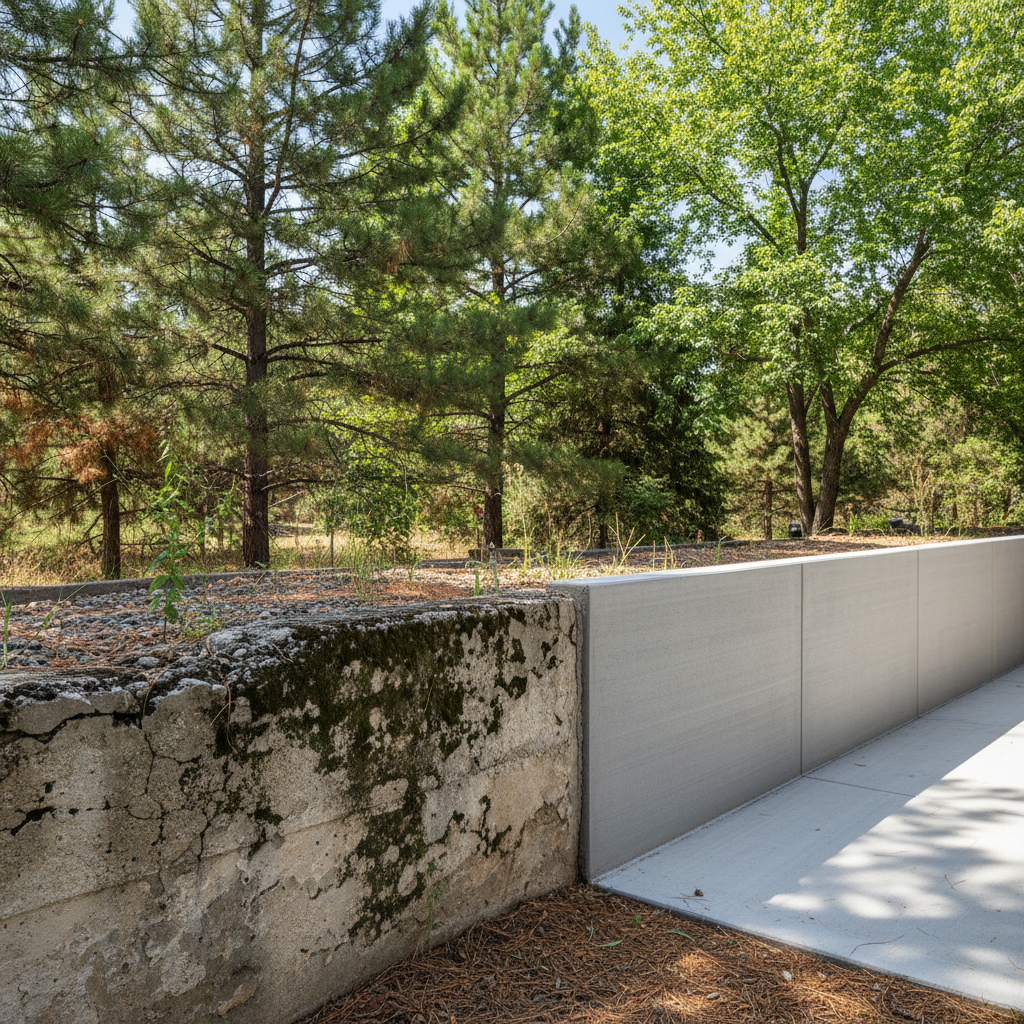
Poured Concrete vs. Block Retaining Walls: What's Best for Your Flagstaff Yard?
So, you're thinking about a retaining wall. Maybe your yard slopes a bit, or you need more flat space, or you just want to make things look nicer. Good idea. Retaining walls aren't just for show; they're super important for managing soil, stopping erosion, and keeping your property stable, especially with all the freezing and thawing we get here in Flagstaff.
When it comes to concrete options, you'll generally find two main types: poured concrete and concrete block. Both have their uses, but for homeowners right here in Flagstaff, one usually wins out. Let's really dig into the good and bad of each.
Poured Concrete Retaining Walls: The Unsung Hero
This is what I usually suggest for serious structural needs, and it's something we do a lot of at Flagstaff Concrete Paving. When I say 'poured concrete,' I mean we build forms, put in rebar (that's steel reinforcement), and then pour ready-mix concrete directly into those forms. Think of it like building a mini-foundation for your yard.
Durability & Strength:
- Unmatched Strength: This is where poured concrete really shines. With the right rebar and concrete mix, you get one solid, incredibly strong wall. It's built to handle a lot of soil pressure, heavy loads, and those nasty ground shifts we sometimes see from our expansive clay soils around places like Cheshire or Forest Highlands.
- Long Lifespan: A well-built poured concrete wall can easily last for generations. We're talking 50, 75, even 100 years with very little trouble. It's an investment that truly pays off.
Appearance:
- Versatile Finishes: You might think poured concrete looks kind of plain, but that's just not true. We can stamp it, color it, or even texture it to look like stone or brick. You can go for a smooth, modern vibe or something more rustic. It's really a blank canvas, isn't it?
- Seamless Look: No joints or gaps means fewer places for weeds to pop up or water to sneak through.
Cost:
- Higher Upfront: Typically, poured concrete walls will cost more at first than block walls. There's more work involved in building forms, setting rebar, and getting concrete delivered.
Maintenance:
- Very Low: Once it's in, you're pretty much done. Just keep an eye on drainage, but major cracking is rare if it's designed and poured correctly.
Concrete Block Retaining Walls: The DIY Favorite
When I talk about concrete block walls, I'm usually thinking about segmental retaining wall (SRW) systems. These are those interlocking concrete blocks you see stacked up. They're popular for good reasons, but they do have their limits.
Durability & Strength:
- Good for Smaller Jobs: For shorter walls (say, under 4 feet) holding back lighter loads, block walls can be perfectly fine. They're designed to be a bit flexible, which can be a plus in some situations.
- Less Structural Integrity: They aren't one solid piece. Each block is a separate unit. While they interlock, they don't have the continuous steel reinforcement you get with a poured wall. This means they're more likely to bow, shift, or fail under heavy pressure or if drainage isn't great, especially over time.
Appearance:
- Pre-designed Look: Blocks come in various colors and textures, so you get a finished look right away.
- Joint Lines: You'll always have those visible lines between blocks. Some folks like this look, others don't. They can also be spots where weeds start or water gets in.
Cost:
- Lower Upfront: Generally, block walls are cheaper to put in, especially if you're doing it yourself or hiring a landscaper who specializes in them. The material cost per square foot is often less, and installation can be quicker for simpler designs.
Maintenance:
- Higher Potential: Because they're made of individual units, blocks can shift, settle unevenly, or even pop out as time goes on. You might find yourself resetting blocks or dealing with erosion behind the wall.
My Recommendation for Flagstaff Homeowners
Look, if you're building a small, decorative garden bed or a short terrace that isn't holding back a lot of earth, a well-installed concrete block wall can work just fine. It's a good DIY choice for light-duty projects.
But for anything structural – a wall over 3-4 feet, a wall supporting a driveway, a foundation, or a significant slope – I'm going to tell you to go with poured concrete every single time. Especially here in Flagstaff, where we deal with heavy snow loads, significant runoff during monsoon season, and those ground movements from our freeze-thaw cycles, you really need a wall that's engineered to stand strong. The extra upfront cost for poured concrete is a small price to pay for a wall that won't be failing on you in 10 or 20 years.
You want a wall that's going to last, protect your property, and look good doing it. Poured concrete delivers that strength and longevity you just can't get from a block system for serious applications. Give us a call at Flagstaff Concrete Paving if you're looking for a retaining wall built right the first time.